UVT: THE FOUNDATION MOST TOF ADS ARE MISSING
CREATIVE STRATEGY
Tom Jenkins
1/22/20263 min read
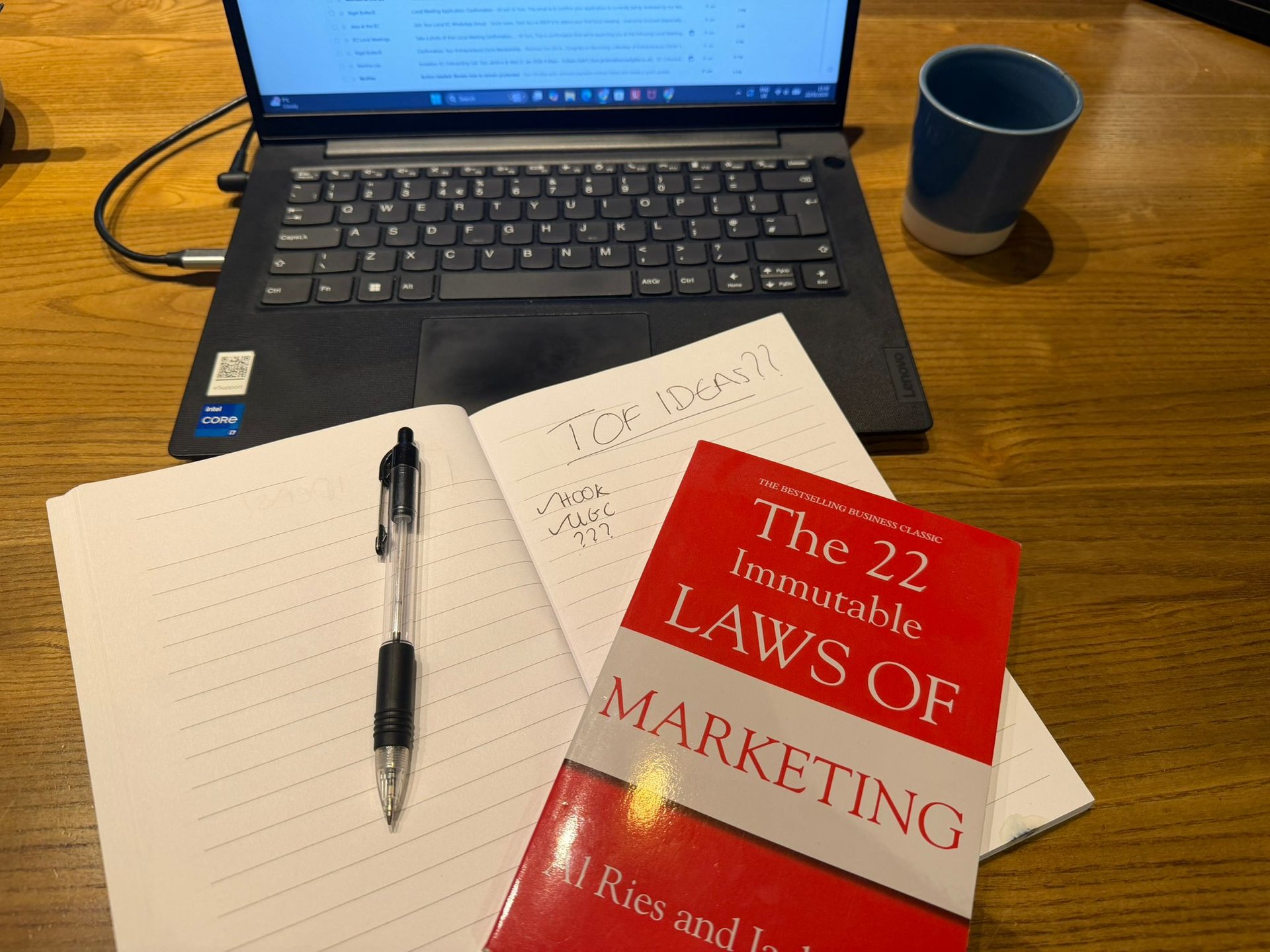
Before we get into it, if you’re expecting this to be about campaign set ups or the anatomy of a winning ad then you’ve probably already read too far.
I’m here to talk to you about the foundation of winning TOF ads.
If you were to ask any content strategist or paid media expert what makes a good TOF creative, they’d likely answer with one of the following:
“It needs to address the users problem and position (product/service) as the solution”
“A good UGC testimonial usually does the trick”
“You’re fishing for attention from new people who haven’t heard of you yet so you need a brand story”
I’m not saying they’re wrong, these are very valid answers and a combination of all 3 is probably going to get you good results if the execution is right. I’m also not ignoring the fact that successful creatives need to have a strong hook/pattern interrupt.
I’d like to take a step back and introduce a framework I call UVT, the foundation of winning TOF ads.
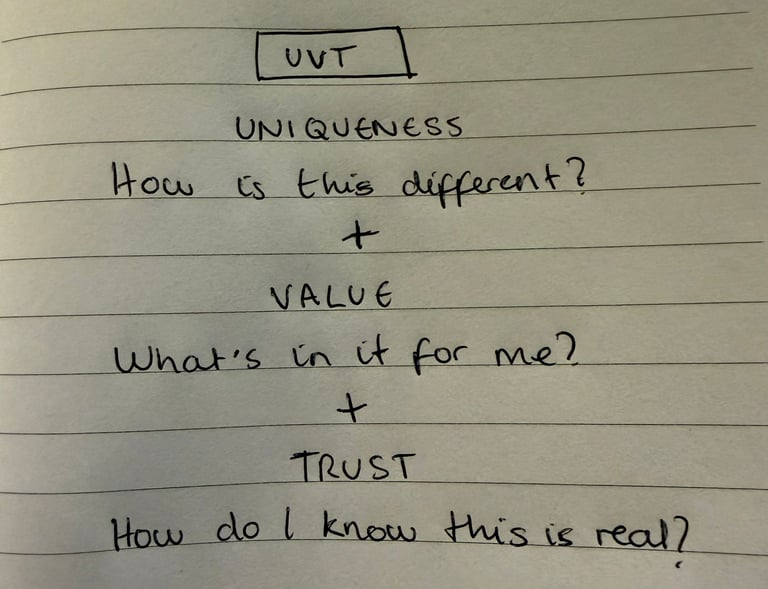
The three pillars of UVT are: uniqueness, value and trust.
UNIQUENESS
Ever jumped on a trend a bit too late and seen your content flop? That’s because the first question a prospect has once you’ve lured them in with a clever hook is:
How is this different from everything else I’ve seen?
And the answer doesn’t have to be a world first product (although it never hurts). Uniqueness can come from how you show something, not what you sell.
It might be a founder explaining why the product isn’t for everyone. A creator comparing your product to the most obvious alternative and admitting where it falls short. Sometimes it’s as small as breaking a visual norm.
Side note: world first products are usually the reason we end up with proprietary eponyms, for example: Hoover (brand name) for vacuum cleaner (product category) or Uber (brand name) for taxi app (service category). Also heavily linked to law 3 (the law of mind) in Al Ries’ and Jack Trout's book: The 22 Immutable Laws of Marketing.
VALUE
Now you’ve got your prospects attention, the next question they will have it:
What’s in it for me?
Value usually shows up as education or entertainment, ideally both. It might be a quick tip that saves you time, debunking a myth or offering a new solution to a common problem. Sometimes value is just making someone feel seen by calling out a frustration they didn’t know they had.
The key is that the value comes before the product. The ad should feel worth watching even if they never click. When you give the audience something first, you earn the right to introduce what you’re selling.
TRUST
The next question your prospect is asking is:
How do I know this is real?
This is where TOF ads get uncomfortable because the video is getting long, and the temptation is to force credibility with social proof (number of units sold and happy customer figures - we’ve all seen them before). Sometimes it works, but it just feels like a hard sell most of the time.
I always say authenticity is king. Low production creator content and founder led ads (aka: ugly ads) build trust because they feel closer to the truth and have a higher organic appeal. The more human it feels, the more believable it becomes.
So if your TOF campaigns aren’t working, it’s probably not your targeting, your structure, or even your hooks.
It’s the foundation.
Next time you’re briefing TOF creatives, stop thinking like a marketer and start thinking like a customer. Once the hook’s done its job, the ad still has to answer three questions:
How is this different from everything else I’ve seen?
What’s in it for me?
How do I know this is real?
If you can answer all three without forcing it or over-selling it, you’re giving yourself a real shot at winning TOF.
That’s UVT.